


Latest news

Deere & Company confirmed $110 million in tariff refunds in the third quarter of fiscal 2026, bringing cumulative refunds to $382 million, but expects no further refunds this fiscal year. The company projects tariff expenses will approach $1 billion in 2027, an increase from this year.

U.S. President Trump announced via social media on Monday that he will impose 50% tariffs on cars, trucks, auto parts, and steel imported from Canada, effective January 1. This follows the breakdown of U.S.-Canada trade negotiations last Friday, with Canadian Prime Minister Carney vowing to retaliate in kind. The White House has not yet issued a formal tariff order, and the integration of the new tariffs with existing Section 232 provisions and the USMCA remains unclear.

The National League of Cities (NLC) has teamed up with cybersecurity firm CyberAlliance to provide local governments with AI-assisted cyber risk assessments and resilience strategies. The initiative includes access to workshops, benchmarking, and CyberAlliance's Sally AI platform. It arrives as municipalities face a 42% surge in cyberattacks and the loss of federal funding for the MS-ISAC program.

Las Vegas opened a new bus rapid transit line on Sunday, featuring 60-foot zero-emission hydrogen fuel-cell buses. The $378 million project, funded by federal grants and local sources, aims to cut bus travel time by 20% and serve 13,000 daily riders by 2040.

During its second-quarter earnings call, Target stated that inventory availability for its most frequently purchased products has reached its strongest level in recent years, thanks to collaborative improvements across supply chain, merchandising, and store teams, as well as the support of digital tools such as Proxima.
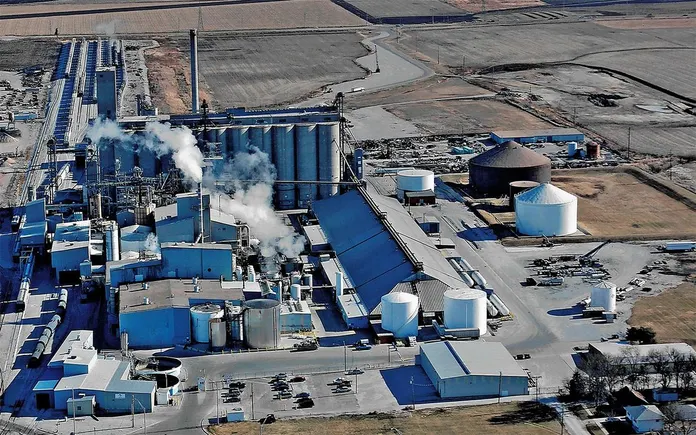
ADM announced on its August 4 earnings call that it will invest approximately $100 million to expand four US oilseed crushing plants, expected to be completed by 2028 or 2029, aiming to meet growing demand for renewable fuels and vegetable oils.

Retail theft is increasingly rampant, with supply chains becoming key targets for criminal groups. CargoNet reports 767 supply chain crime incidents in Q1 2026, with losses exceeding $131.58 million. On the policy front, the CORCA Act proposes establishing a coordination center. Industry experts point out that the solution lies in strengthening supply chain data integrity, enabling cross-enterprise data sharing through serialized tracking, RFID technology, and EPCIS standards, thereby improving investigation efficiency, combating crime, and delivering multiple benefits such as inventory optimization.

The traditional metrics for freight audit are the number of errors detected and the amount recovered, but the industry is shifting toward a more forward-looking question: why errors occur and how to avoid their recurrence. By integrating multi-source data such as EDI and APIs, and leveraging AI and machine learning, audit can evolve from transaction control to a preventive mechanism, ultimately forming transportation financial intelligence to support better decision-making.

The United States and Canada failed to reach an agreement on Friday to avoid the 50% tariff promised by President Trump, further deteriorating bilateral trade relations. Canadian Prime Minister Carney announced the suspension of negotiations and instructed negotiators to return to Ottawa. The US side accused Canada of making new demands and reneging on commitments. The 50% tariff has now taken effect, and Canada plans to implement reciprocal retaliation measures on September 8.
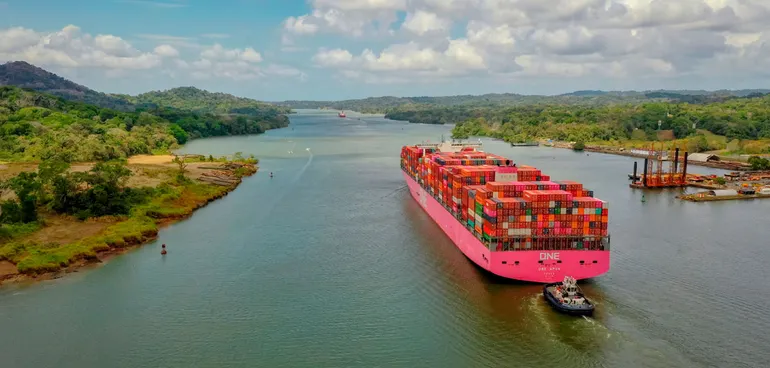
The Panama Canal Authority issued a shipping advisory on August 20, announcing that due to drought issues caused by El Niño, it will reduce the daily transit slots for the Neopanamax locks from the usual 10 to 9 starting September 3, and for the Panamax locks from the usual 26 to 25 first, then further to 23 on September 15. Meanwhile, the 48-foot draft restriction originally scheduled to take effect on August 26 has been postponed to September 2, and the 47.5-foot draft restriction originally scheduled for September 3 has been postponed to October 1. The Authority stated that precipitation in the watershed during the current hydrological year (May to August) is 34% below the historical average, and El Niño in 2026-2027 may further reduce rainfall.